Melbourne building & pest inspection
We photograph every defect. Then we tell you which ones matter.
A long report is not much use at 10pm the night before settlement. So we call you, walk you through what we found, and separate the cracked cornice from the cracked footing.
Fixed pricing by property size
- 1 bedroom
- $495
- 2–3 bedrooms
- $550
- 4 bedrooms
- $595
- 5 bedrooms
- $649
For properties with more than 5 bedrooms, contact us for a fixed quote.
- AS 4349.1 & AS 4349.3
- Report within 24 hours
- Independent, plain-English reports
 InspexpertBuilding and Pest Inspection
Why trust Inspexpert
Professional inspection, clear accountability
You receive a standards-based inspection from a fully insured inspector, documented clearly and explained directly after the visit.
Standards-based scope
Building inspections follow AS 4349.1 and timber pest inspections follow AS 4349.3.
Fully insured inspectors
Current insurance details are included in your inspection report.
Direct inspector support
The person who inspected the property calls you to explain the findings.
Transparent reporting
Photos, limitations and inaccessible areas are recorded so you know exactly what was checked.
Why you can trust our reports
Australian Standards
Every inspection is carried out to AS 4349.1 for the building and AS 4349.3 for timber pests.
Independent reports
We are not the agent's inspector. What we find stays between us and you.
Fast reports
Your report lands within 24 hours, and often the same evening.
Plain-English findings
We tell you what a defect means, not just that it exists — then we call you.
Inspection coverage
A closer look at the areas we check
Different defects need different tools and a methodical visual inspection. These are some of the building elements and conditions considered during an inspection, subject to access and the agreed scope.
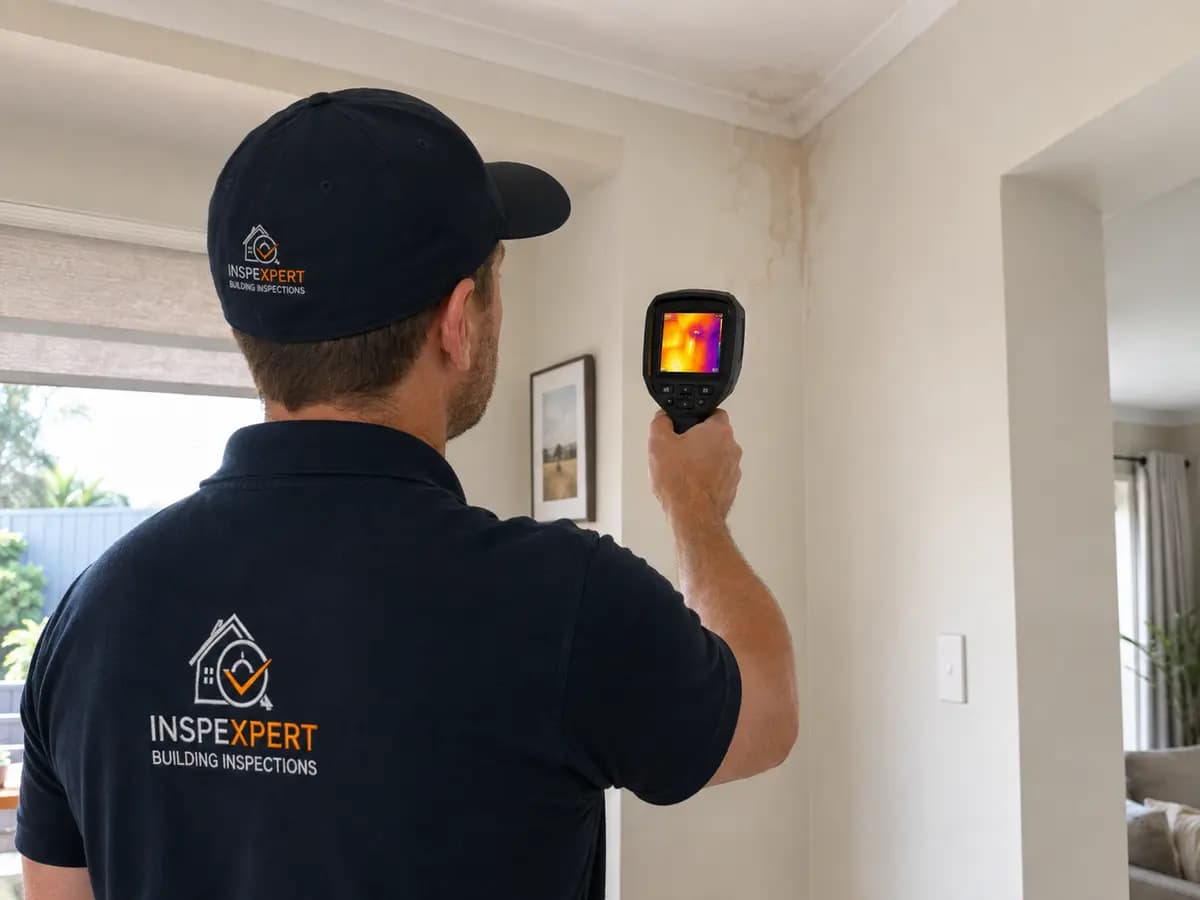
Thermal observations
Thermal imaging can help identify temperature anomalies that may warrant closer investigation.
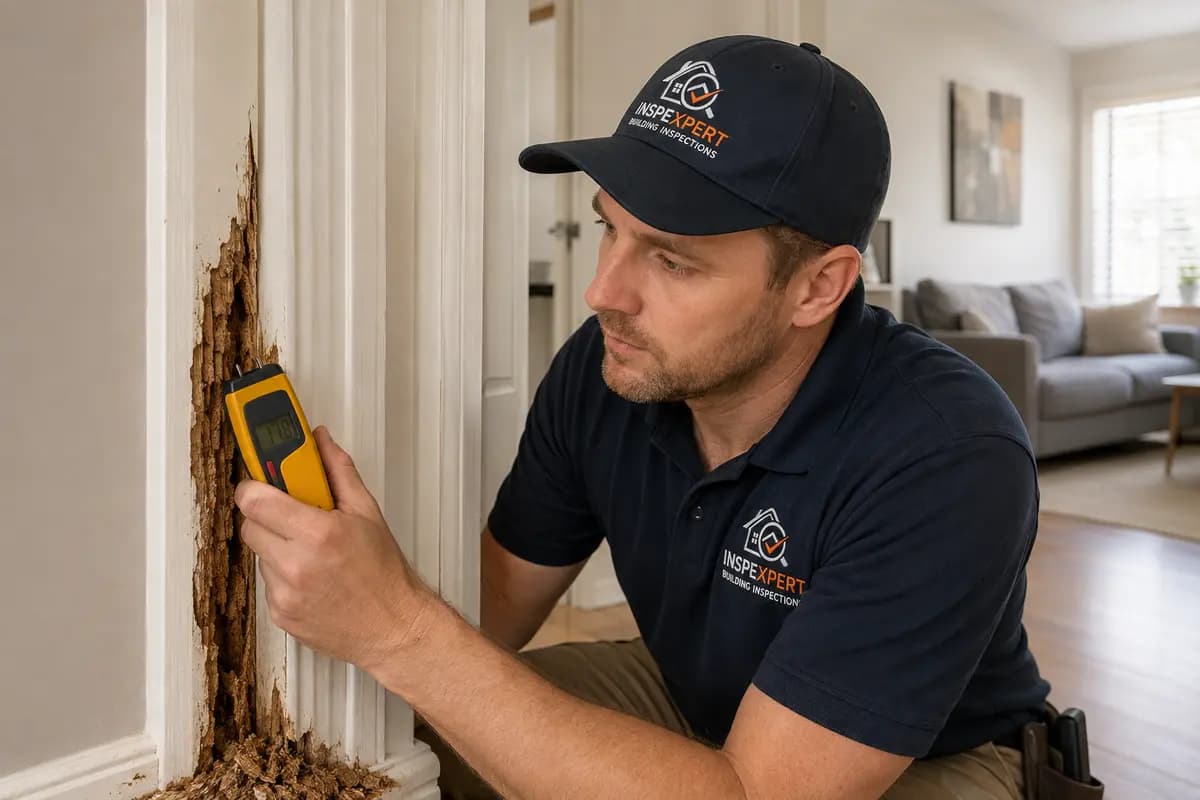
Timber pest and moisture checks
Accessible timber and moisture-prone areas are checked for visible evidence and conducive conditions.
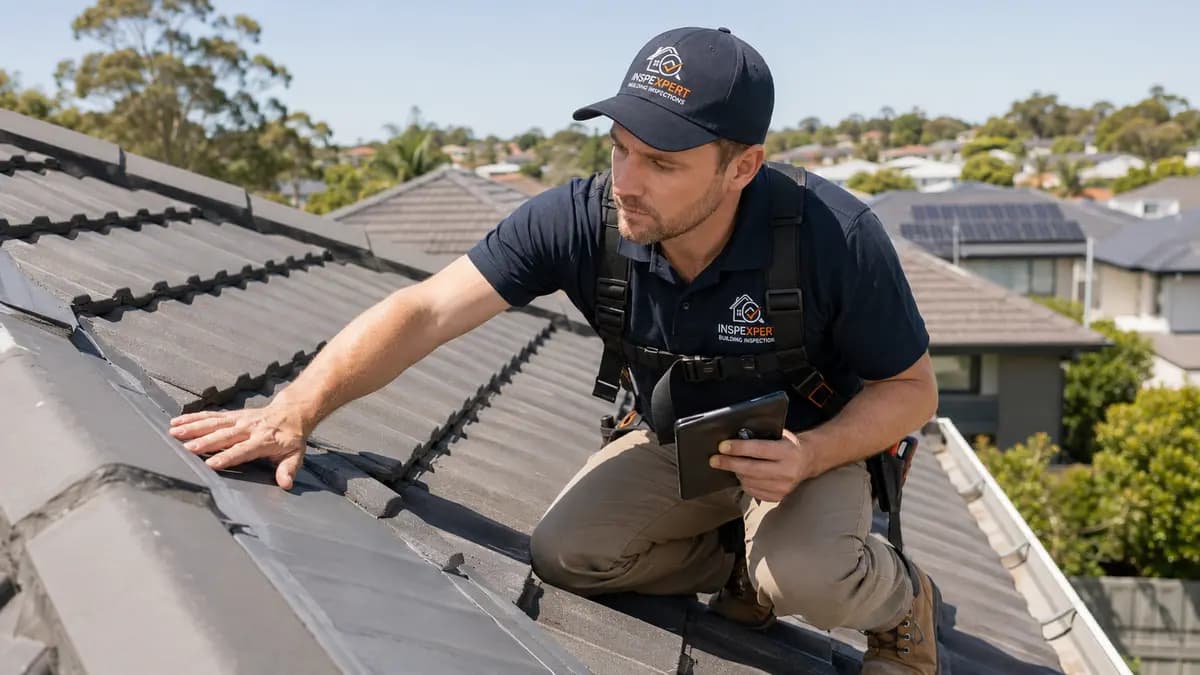
Roof coverings and flashings
Visible roof tiles, junctions, flashings and drainage details are assessed where safe access permits.
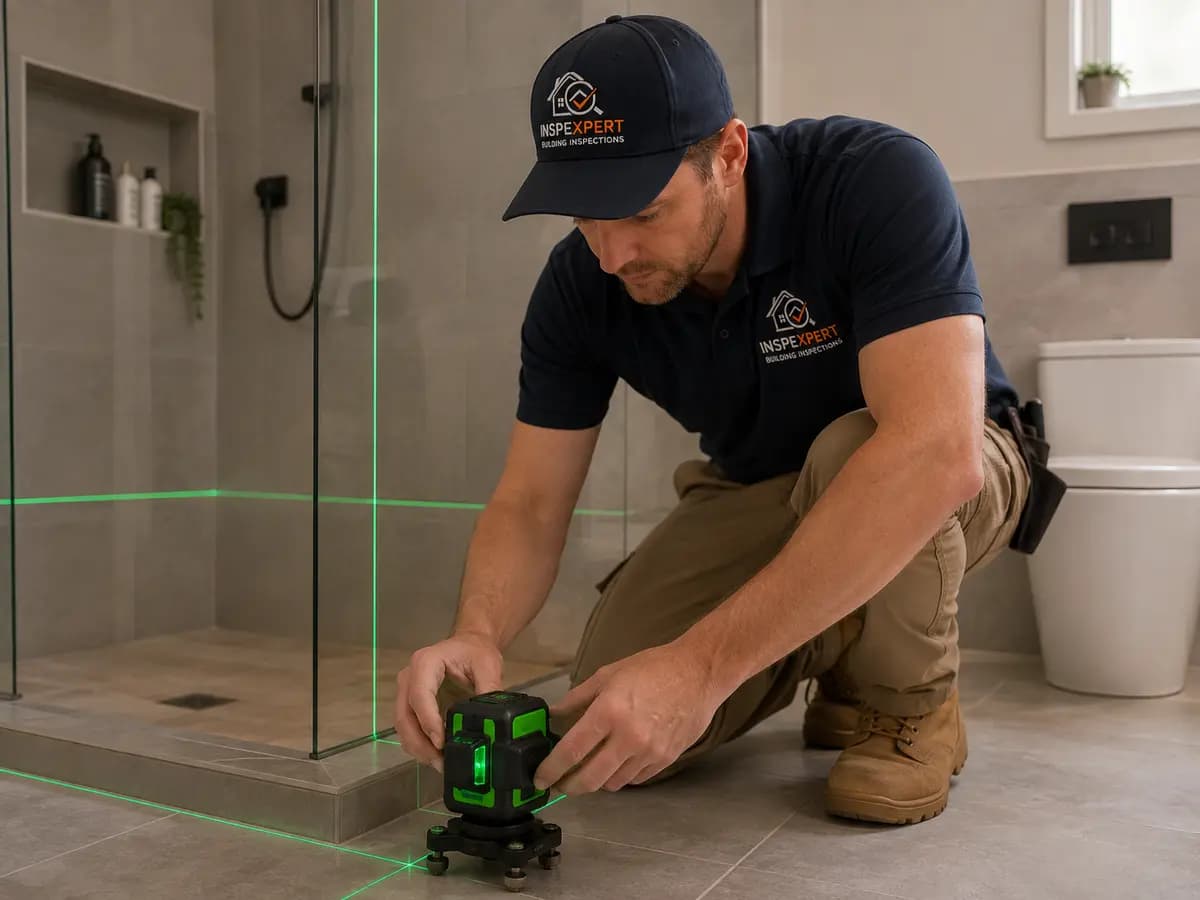
Wet areas
Bathrooms and other wet areas are reviewed for visible defects, falls, finishes and moisture-related concerns.
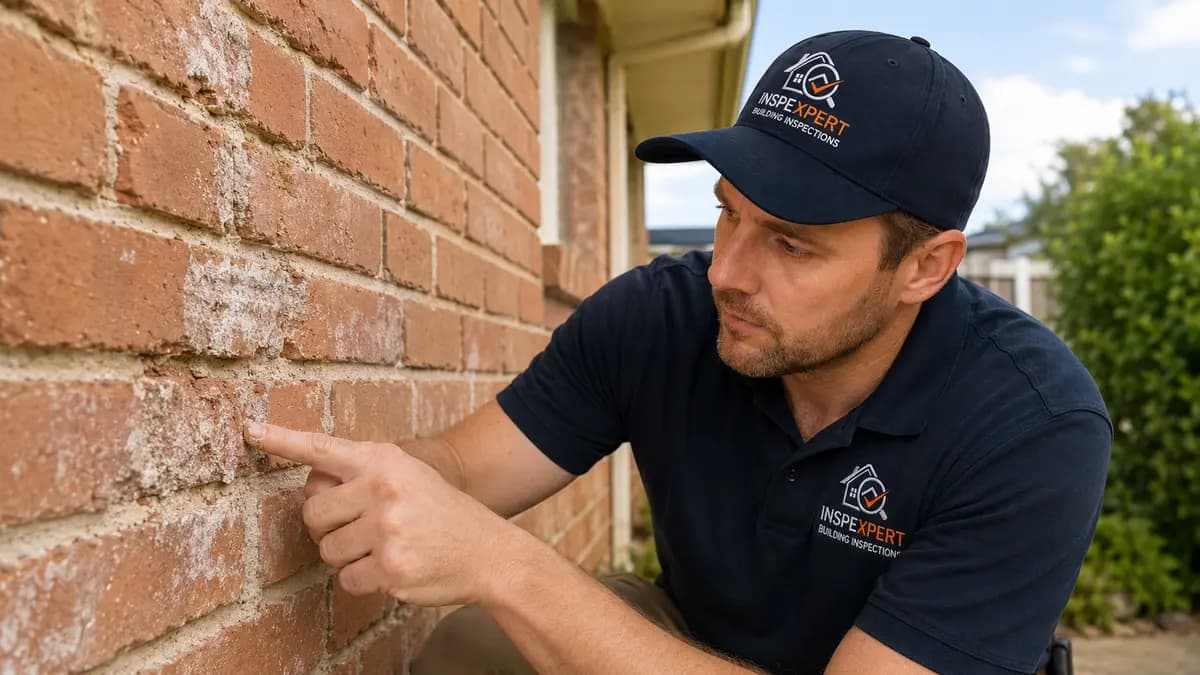
Exterior masonry
Brickwork, mortar, cracking, damp indicators and ventilation details form part of the visible exterior review.
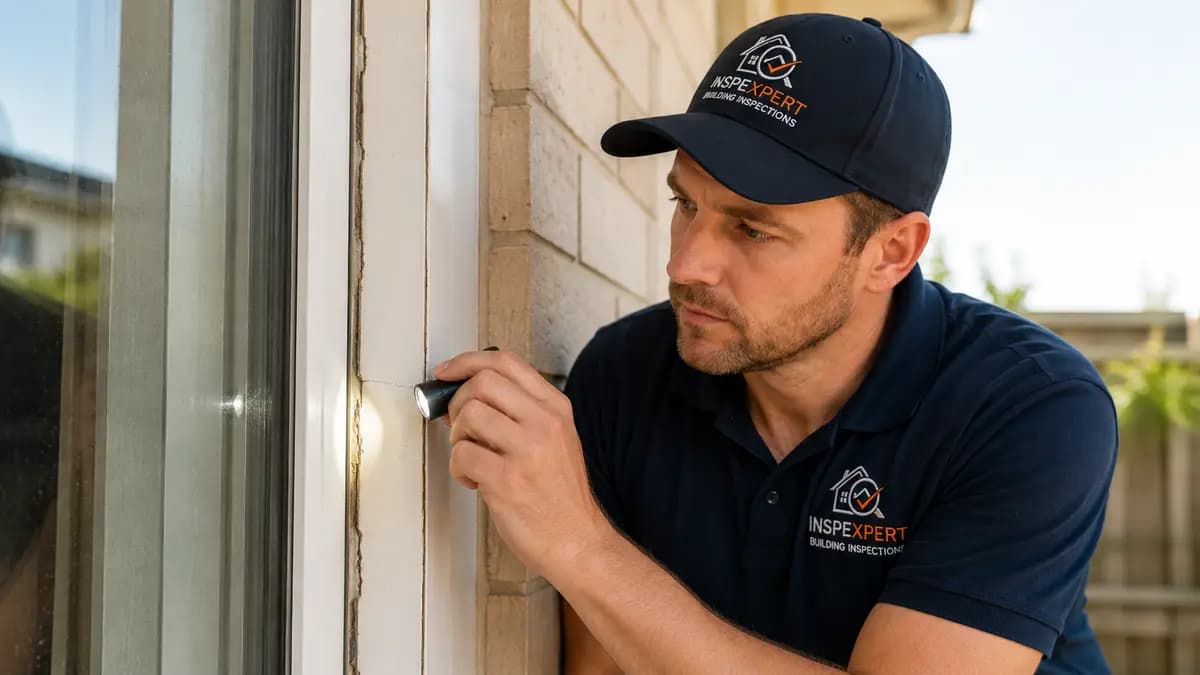
Windows and external seals
Accessible frames, joints and sealants are checked for deterioration and visible water-entry risks.
Inspection technology
Professional tools that support our visual inspection
Tools help identify signs that deserve closer investigation. Their use depends on the property, access and agreed inspection scope.
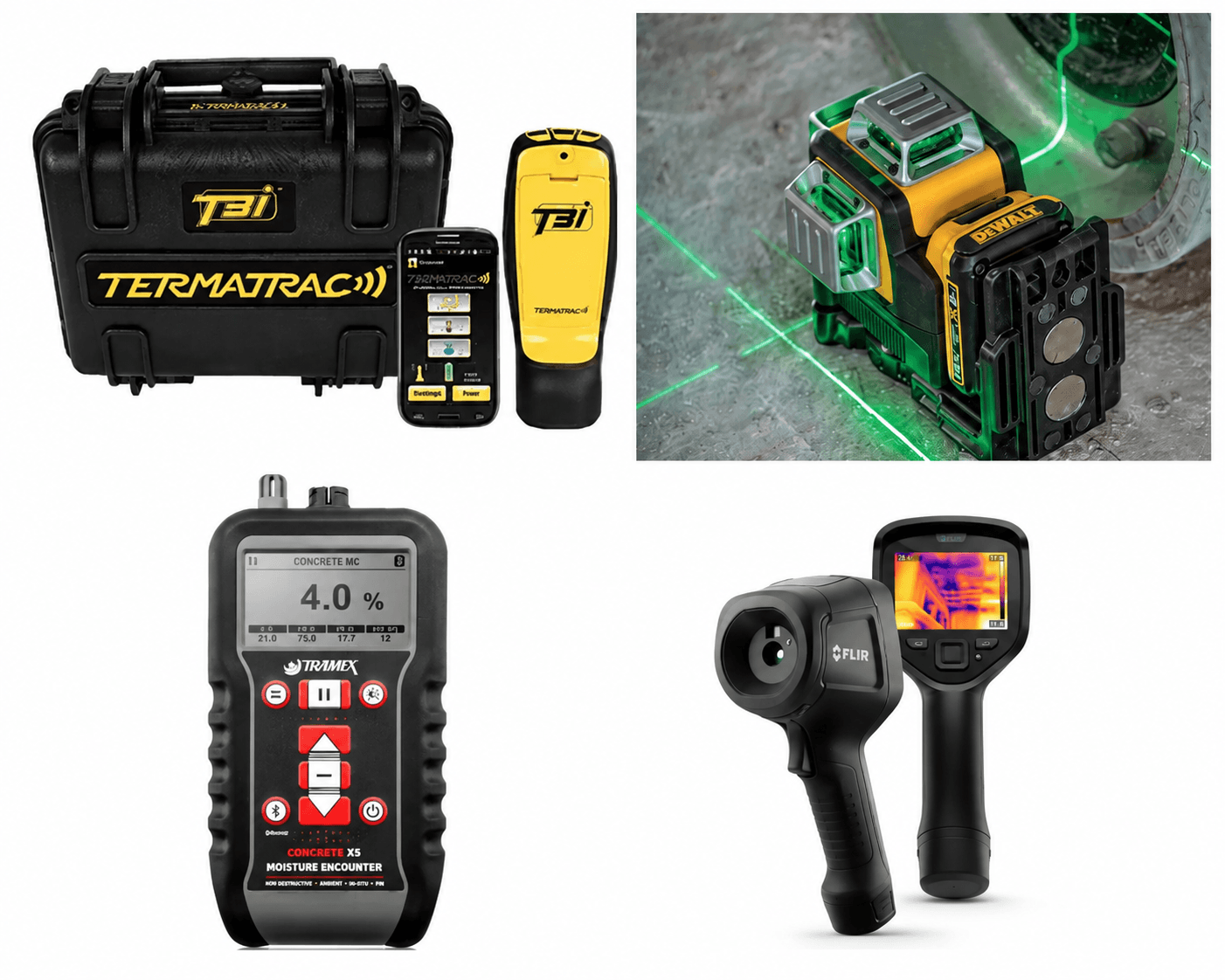
Termatrac T3i Radar Termite Detector
Non-invasive radar can help detect movement associated with termite activity behind accessible surfaces.
FLIR E5 Infrared Camera Thermal Imaging
Thermal imaging highlights surface-temperature anomalies that may indicate moisture or insulation concerns.
Tramex MRHIII Moisture and Humidity Meter
Moisture readings help investigate damp areas and conditions conducive to timber pests.
DeWALT Laser Levelling
Laser levelling helps assess visible falls, alignment and movement in appropriate areas.
By the numbers
What we can stand behind
We only publish figures that are true today. Verified review counts, inspection totals and years on the tools will appear here once confirmed.
Why buyers pick us
Straight answers from the person under the house
You talk to the person who did the inspection
Not a call centre. The inspector who checks your house is the one who rings you about it.
We tell you what a defect means
A cracked wall could be nothing, or it could be the footing. We say which, in plain words.
We tell you what we could not check
Every blocked area is named in the report. No area gets a guess dressed up as a finding.
We are independent
We are not the agent's inspector, and we keep what we find between us and you.
How it works
Four steps, start to finish
- 1
You book
Price fixed on the spot. We sort out access with the agent.
- 2
We inspect
On site to AS 4349.1 and AS 4349.3. Come along if you can.
- 3
You get the report within 24 hours
Every defect photographed and sorted by how serious it is.
- 4
We call you
We walk you through the three things that actually matter, so you can decide with a clear head.

We call you after the inspection
The inspector talks you through the findings, so you know what matters before you decide.
What's covered
What a building and pest inspection covers in Melbourne
This inspection is a visual check of every part of a property the inspector can safely reach. It follows two Australian Standards: AS 4349.1 for the building, and AS 4349.3 for timber pests. A moisture meter matters because water is what draws termites in — find the damp, and you often find them.
The building side
- Roof, gutters and downpipes
- The roof space
- Internal and external walls
- Floors, doors and windows
- Bathrooms, laundry and kitchen
- Wet areas and visible plumbing fixtures
- Internal and external masonry walls
- Subfloor, including stumps, bearers and joists
- Drainage, paths, driveways, retaining walls and fences
- Sheds and garages
The timber pest side
- Live termites and old termite damage
- Borers and wood rot
- Damp subfloors that invite pests in
- Timber stacked against the house
- Blocked weep holes
- Moisture readings where they matter (water draws termites in)
What a building inspection cannot find
This is the part most inspection websites leave out, and we think you should read it before you book anyone, including us.
We cannot see inside a sealed wall. No tool can. Thermal cameras read surface temperature, not timber. Radar reads movement, not damage. If termites have eaten a stud inside a plastered wall and left no moisture and no mud trail, nobody will find it on a visual inspection.
We cannot see under carpet, behind stored boxes, or into a subfloor we cannot physically enter. When access is blocked, we say so in the report and name the area. We do not guess. We do not do invasive testing either — pulling apart a wall would find more, but vendors do not allow it, and courts have accepted that.
A clear report means no visible evidence on the day. It is not a guarantee. Termites can move into a house weeks after an inspection, and when they do, nobody is at fault. We say this plainly because in Victoria, promising that nothing gets missed has already been ruled misleading.
Melbourne property characteristics
Why Melbourne houses crack: reactive clay
Much of Melbourne sits on reactive clay. Clay swells when it takes on water and shrinks when it dries out, so the ground under a house moves with the seasons. That movement shows up differently depending on what the house is made of and when it was built.
- Older timber houses on stumps
- Common through Northcote, Brunswick, Preston and Footscray, these tend to move unevenly. Stumps settle at different rates, floors slope, and doors stop closing. Restumping history matters, and we look for it.
- Slab-on-ground houses
- Most of what was built in Point Cook, Tarneit, Werribee, Craigieburn and Clyde since the mid-2000s. The slab can lift at the edges or sag in the middle, showing as stair-step cracking in brickwork, gaps above windows, and doors that bind in one season and not another.
- Brick veneer from the 1960s–70s
- Fills the eastern and south-eastern suburbs, and sits somewhere between the two in how it moves.
A crack on its own tells you little. What matters is where it is, which way it runs, how wide it is, and whether the rest of the house agrees with it. A hairline crack above a window with every door still swinging freely is usually nothing; a 5mm stair-step crack with a binding door is a different conversation. That judgement is what you are paying for.
What your report tells you
Every item, sorted four ways
Every item we find is sorted into one of four groups, following AS 4349.1. Photos on every item. Plain words, not trade jargon.
Safety hazard
Deal with it now.
Major defect
Structural, or likely to become structural. This is the stuff that changes what a house is worth.
Minor defect
Real, but small.
Maintenance
Normal wear for the age of the building.
After the report, the inspector calls you — not an office. Then you have three moves: go ahead, renegotiate, or walk away. Take the report to your conveyancer, who works for you, not the selling agent.
After the report
What to do next
Then the inspector rings you — not an office, the person who was under the house. That call covers the three things that actually matter, so you can decide with a clear head.
Go ahead
The report is clean enough that you're comfortable proceeding at the agreed price.
Renegotiate
Take the findings back to the table. Major defects are exactly the stuff that changes what a house is worth.
Walk away
Some findings are deal-breakers. Better to learn it now than after settlement.
Take it to your conveyancer, not the agent
Take the report to your conveyancer, not the selling agent — your conveyancer works for you. Read a sample report before you spend a dollar with anyone; a good inspector will let you see one with no email required.
“If this were your money, would you buy it?”
What to ask at the inspection
Come to the inspection. It is the single best thing you can do, and it costs nothing.
Ask this at the property
- Which areas could not be reached, and what might be hiding there.
- What a fix would cost, roughly — and when you need a builder or engineer to price it properly.
- Have the conversation away from the agent. A casual “looks alright” within earshot will be quoted back at you when you renegotiate.
Cost guide
What a building and pest inspection costs in Melbourne
Our combined building and pest inspection price is based on the number of bedrooms. Contact us for a fixed quote if the property has more than five bedrooms or an unusual size or layout.
| 1 bedroom | $495 |
|---|---|
| 2–3 bedrooms | $550 |
| 4 bedrooms | $595 |
| 5 bedrooms | $649 |
| More than 5 bedrooms | Contact us for a quote |
Time on site is what you are buying
Some quotes cover a 45-minute walkthrough. Some cover three hours in a subfloor. Both carry the same name. They are not the same product.
Ask what the price does not include
Travel outside the standard zone, Saturday work, and extra rooms are common add-ons.
A rush fee is normal
If you need a report inside 24 hours for a Saturday auction, most inspectors charge extra.
Timing
When to book, and how the auction changes things
The auction changes everything. Under section 31 of the Sale of Land Act 1962 (Vic), there is no cooling-off period when you buy at a publicly advertised auction — so the inspection has to happen before you raise your hand.
- A
Buying at auction
There is no cooling-off when you buy at a publicly advertised auction, and none if you sign within three clear business days either side of that auction. When the hammer falls, the house is yours, defects included — so the inspection has to happen before you raise your hand. For a Saturday auction, book early in the week: we need a day to arrange access with the agent and a day to get you the report.
- P
Buying by private sale
You get three clear business days to cool off from the day you sign. If you use it, the vendor keeps $100 or 0.2% of the price, whichever is greater — on a $900,000 house, that is $1,800. Three business days goes fast, so book the inspection the day your offer is accepted.
Consumer Affairs Victoria has the full cooling-off rules, and your conveyancer should confirm your position before you sign. For the full auction-versus-private-sale breakdown, read our timing guide.
Do I need one for an apartment?
Yes, and it works differently. Your report covers the lot you are buying, not common property — the roof, lifts, facade, car park and shared plumbing belong to the owners corporation.
So the report is only half the picture. The other half is the owners corporation certificate in the Section 32: fees, insurance and any large works being planned or argued about. We inspect the lot and tell you what to look for in the certificate.
Do I need a building and pest inspection on a brand-new house?
Usually not — you need a different report. For a new build you want stage inspections during construction and a handover inspection before you take the keys, checked against the plans and the standards.
A pre-purchase inspection is designed for an existing house. If you are close to handover, we will tell you which one you actually need.
FAQs
Frequently asked questions
How long does the inspection take?
It depends on the size, age and access of the property. A standard Melbourne house takes a few hours; large, old or hard-to-access homes with deep subfloors take longer.
When do I get the report?
Within 24 hours, and often the same evening.
Do I have to be there?
No, but come if you can. The last twenty minutes, when you can point at something and ask, are worth more than the report.
Can I use the vendor's report?
Be careful. If you did not commission the inspection, you have no contract with the inspector, so they owe you no duty of care and you cannot hold them to anything in a report you did not pay for. Get your own.
What if the inspector misses something?
An inspector is liable where it can be shown they should reasonably have seen the evidence. A disclaimer will not protect an inspector from clear negligence, but it will apply where the damage was genuinely hidden inside a wall. This is why access matters and why we record every area we could not reach.
How long is my report valid for?
There is no expiry date, but a building and pest report is a snapshot of one day. Most conveyancers treat anything past 60 to 90 days as stale. If you are bidding on the same house months later, get it looked at again.
Do I pass or fail?
Neither. An inspection is not a test. Every house has defects. The report tells you what they are and how bad, so you can decide what to do.
Who pays for it in Victoria?
The buyer, nearly always. It is not required by law, and the bank will not ask for it. It is due diligence, and it is on you.
Are you insured?
Yes. Our inspectors are fully insured, and current insurance details are included in your inspection report.
What standards do you work to?
AS 4349.1 for the building inspection and AS 4349.3 for the timber pest inspection. They are two separate standards. A quote that only mentions one is only doing one.
Our inspections
Choose the inspection that fits
Every inspection ends in a clear, plain-English report, sorted by how serious each finding is.
Where we inspect
Buyer's guides
Read before you buy
We know what each part of Melbourne is built from
We inspect houses, units, townhouses and apartments across Melbourne. Weatherboard on stumps in the inner north. Post-2005 slab-on-ground out west and in the growth corridors. Brick veneer through the east. Warehouse conversions and high-rise in the CBD, where the owners corporation certificate matters as much as the report.
Book an inspection
Call 0426 483 268, or fill in the form and we will call you back today. We arrange access with the agent for you.
- Independent Reports
- Fast Reports
Sources & references
Local characteristics on this page are general and reference the following:
- Standards Australia / business.gov.au (ABLIS) — AS 4349.1 Inspection of buildings — Pre-purchase inspections referenceSupports: Building inspection standard
- Standards Australia — AS 4349.3 Timber pest inspections (AS 4349.3)Supports: Timber pest inspection standard
- Victorian Building Authority — Register of Building Practitioners (practitioner search) referenceSupports: Practitioner registration verification
- Consumer Affairs Victoria — Cooling-off period when buying property referenceSupports: Cooling-off rights and timing
- Victorian Legislation — Sale of Land Act 1962 (Vic) s.31 referenceSupports: No cooling-off at public auction
- AustLII — Garrett v Elim — VCAT referenceSupports: Misleading inspection marketing ruling